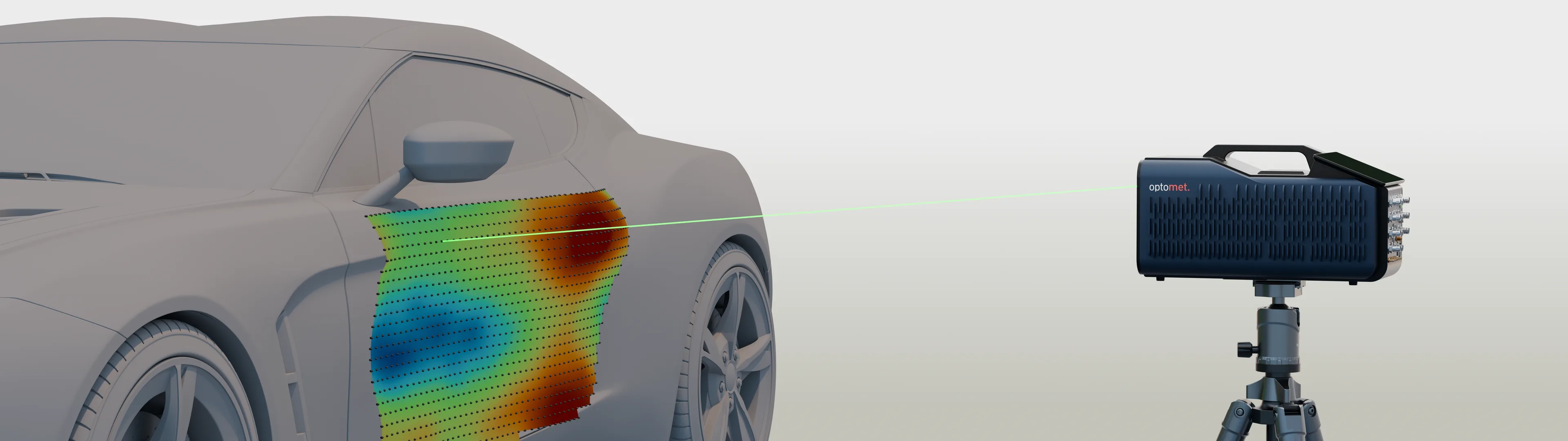
Laser scanning vibrometers.
- Full-field measurement: Automatic scanning of up to 512 × 512 points over measurement areas ranging from < 1 mm² to > 10 m².
- Non-contact analysis: No additional mass added to the test object – suitable for sensitive, hot, or moving surfaces.
- Measurement range: Frequency bandwidth from 0 Hz to 50 MHz and vibration velocities up to 50 m/s.
- Data transfer: Digital via Ethernet or analog outputs. Analysis and visualization using SMART Lab software or integration into existing systems.
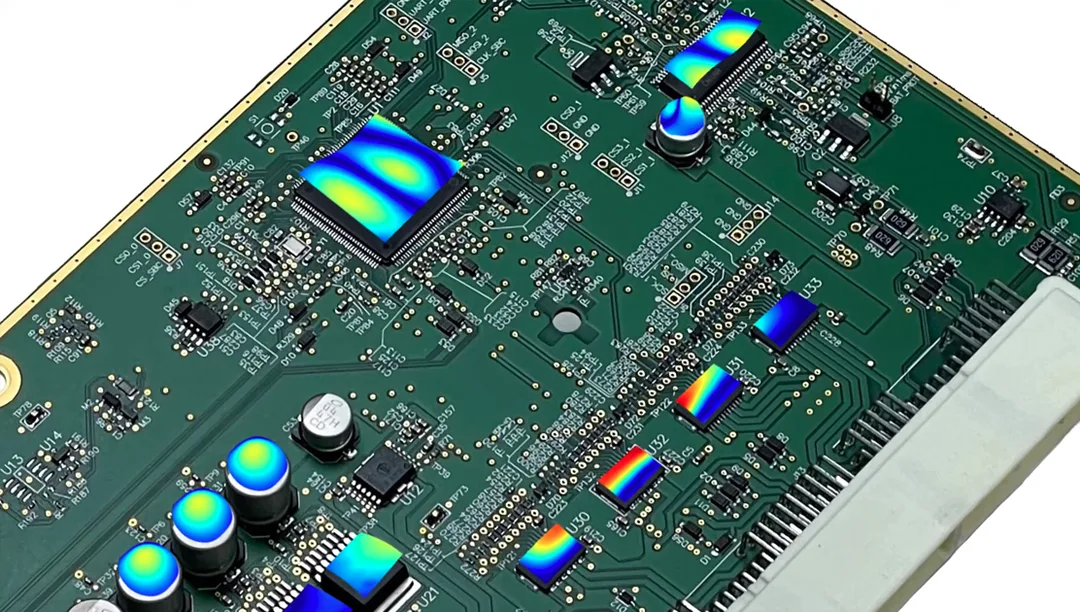
- Visualization: Modal analyses, vibration patterns, and mode shapes displayed in 1D or 3D.
Laser scanning vibrometers capture vibrations across entire surfaces without contact. By automatically scanning a defined grid of points, they measure velocity, displacement, and acceleration at each measurement point. These systems are used when detailed vibration patterns, modal analyses, or FEM validations are required.
What is a laser scanning vibrometer?
A laser scanning vibrometer measures vibrations non-contact and sequentially at multiple points on a test object. The laser beam is automatically guided across a defined measurement grid. Velocity, displacement, and acceleration are recorded at each point, providing a complete representation of the component’s vibration mode shapes—from local resonances to global modes.
Scanning vibrometers are used when the spatial distribution of vibrations is of interest, such as in modal analysis, NVH testing, or the validation of numerical models. Because the measurement is entirely optical, the test object remains unaffected. No additional mass is introduced, unlike with accelerometers or other contact sensors. The system’s natural frequencies remain completely unchanged.
Measurements can be performed regardless of surface characteristics, even on extremely hot components—for example, high-temperature engine and drivetrain components on a test bench.
Comparison: Scanning and Single-Point Vibrometers
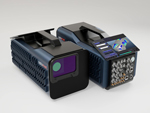 | 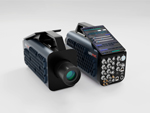 | |
|---|---|---|
| Measurement principle | Automatic scanning of an area across multiple measurement points to capture a complete vibration mode shape. | Measures vibration at a defined point along the laser axis. |
| Positioning | No repositioning required—the laser beam is guided across the measurement field by integrated scanning mirrors. | Repositioning is required to measure a different point. Alternatively, multiple Single-Point Vibrometers or Fiber Heads can be used. |
| Spatial information | 2D or 3D information, depending on the system configuration. | 1D information (velocity, displacement, and acceleration along one axis). |
| Typical applications | Full-field vibration analysis, modal analysis, and investigation of complex structures. | Single-point measurements on machines, tools, structures, or components for quality inspection. |
Measurement Process Using a Laser Scanning Vibrometer
Using the Optomet SMART Scan+ as an example, the typical workflow for full-field vibration measurement can be illustrated in three steps. The scanning laser vibrometer combines measurement technology, data acquisition, signal generation, and reference channels in a single device. The accompanying SMART Lab measurement and analysis software assists with test setup, automates data acquisition, and enables direct analysis of the results.
Set up the system
The scanning vibrometer is positioned in front of the test object and aligned with the measurement area. The integrated camera displays a live image on the touchscreen at the rear of the device, making alignment and focusing easier. SMART Lab guides users through the calibration process. The vibrometer, data acquisition, signal generator, and reference channels are all integrated into the device, allowing the system to be ready for measurement in no time.
Define the measurement area intelligently
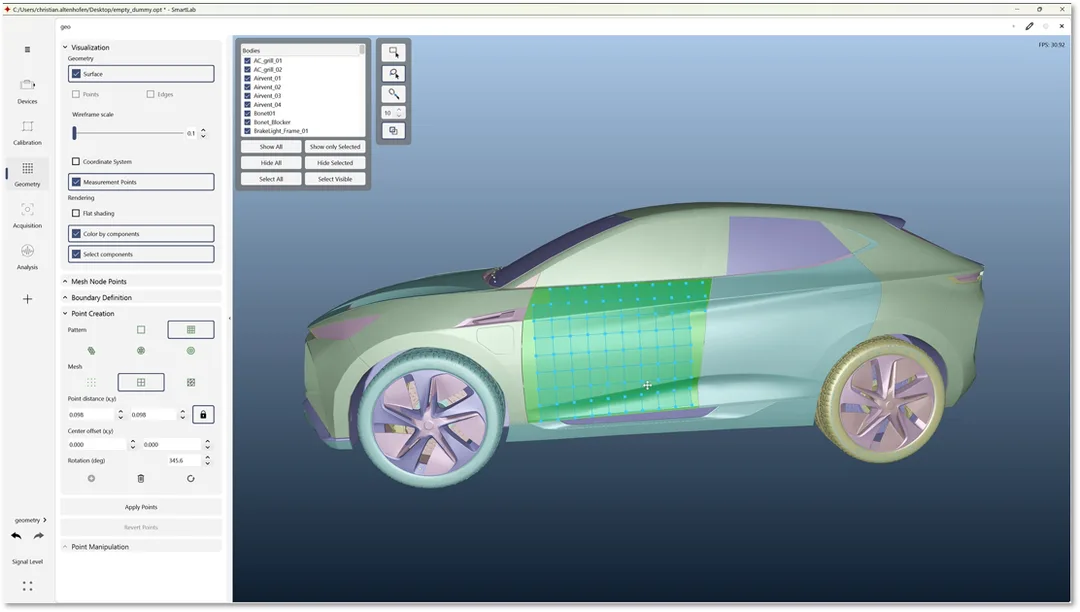
In SMART Lab, the measurement area is selected directly on an imported 3D model. Often, a single click on the desired component, such as a vehicle door, is all it takes. The software automatically generates a uniformly distributed measurement grid that precisely follows even complex curved surfaces. Alternatively, the measurement area can be defined directly in the camera image.
Measure and analyze automatically
Once started, the laser automatically moves to each measurement point and captures existing or deliberately induced vibrations. Measurement and reference signals are synchronized and spatially mapped. SMART Lab immediately presents the results as frequency spectra, frequency response functions, and animated deflection shapes. The modal analysis option can also be used to determine natural frequencies, damping ratios, and mode shapes.
Advantages over conventional sensors
 | | |
|---|---|---|
| Measurement point density | Many individual sensors required; limited spatial coverage | Automated scanning of hundreds to thousands of points for high spatial resolution |
| Complex geometries | Limited applicability in hard-to-reach areas | Measurements on complex structures and detailed mode shape analysis |
| Measurement time | Complex setup and long measurement times due to the use of numerous individual sensors | Full-field measurement typically completed in about one hour through automated scanning |
| Surface preparation | Requires adhesive bonding, screws, or mechanical mounting | No surface preparation required; completely non-contact |
| Effect on natural frequencies | Affects vibration behavior | Does not affect vibration behavior |
| Measurable frequency range | Typically limited to a few kHz up to several tens of kHz | Up to 50 MHz (SMART Series), up to 25 MHz (CLASSIC Series) |
Reference signals and measurement point synchronization
A scanning laser vibrometer measures the points of a measurement grid sequentially. To produce a spatial vibration map with accurate phase information, all measurements require a common time reference. This can be provided by a reference sensor or directly by the synchronized signal from the integrated signal generator.
Reference from the integrated signal generator
When the test object is excited reproducibly by the integrated signal generator of the SMART Scan+ via a shaker or piezo actuator, the time history of the excitation is known. The generator signal serves directly as the phase reference, allowing the individual scan points to be combined into an operating deflection shape with accurate phase information—without an external reference sensor.
This method is particularly suitable for rapid vibration visualization and comparative studies. However, because the generator signal does not represent the mechanical force actually applied, it does not yield a force-referenced frequency response function.
Measured reference for quantitative analyses
For quantitative experimental modal analysis, the actual excitation force is measured using a force transducer on the shaker or an instrumented impact hammer. The vibration response at each measurement point is referenced to this force. This produces mechanical frequency response functions from which natural frequencies, damping values, and modal parameters can be determined reliably.
For operating vibration measurements, a fixed accelerometer, microphone, or additional laser Doppler vibrometer can instead serve as the phase reference. This makes it possible to visualize operating deflection shapes, known as ODS, with accurate phase information even when the excitation is unknown.
Operation with or without reference sensors
Scanning laser vibrometers can be operated either with or without reference sensors. Depending on the objective of the analysis, measurement methods are available that either provide precisely defined modal parameters or measure vibrations directly under real-world operating conditions.
Measurements without a reference signal
If only amplitudes, frequency spectra, or RMS values are required at the individual measurement points, no reference is needed. The scan then shows where strong or weak vibrations occur. However, this data cannot be used to reconstruct a spatial vibration pattern with accurate phase information.
A complete measurement and excitation platform
SMART Scan+ combines a scanning vibrometer, data acquisition, signal generation, and up to twelve reference channels in one compact system. Force sensors, accelerometers, and microphones can be connected directly, while TEDS sensors are detected automatically. An optional fiber-coupled sensor head is available for fully non-contact reference measurements.
Depending on its configuration, a SMART device provides up to eight independently configurable arbitrary waveform generator channels. Waveform, frequency, amplitude, and phase can be defined individually for each channel—even for high-frequency excitation at high data rates. This supports both simple single-channel excitation and complex multichannel tests with defined phase relationships.
SMART Lab synchronizes all generator, vibrometer, and reference channels on a common time base. Connecting multiple SMART devices allows measurement and generator channels to be expanded modularly. Tasks that would otherwise require separate signal generators, DAQ systems, and synchronization hardware can therefore be implemented on a single integrated platform—faster to set up, flexibly scalable, and centrally controlled.
EMA – Experimental Modal Analysis
In experimental modal analysis (EMA), a reference signal is required. Excitation is applied in a controlled and reproducible manner, for example using a modal hammer, shaker, or piezo actuator. The reference signal provides a fixed phase, time, and amplitude reference, enabling the measurement points to be combined with accurate phase information.
EMA enables:
- Precise frequency response functions (FRFs)
- Accurate determination of natural frequencies and damping values
- Clear, reproducible mode shapes
- Targeted excitation of individual modes
- Controlled and repeatable measurement conditions
OMA – Operational Modal Analysis
In Operational Modal Analysis (OMA), no defined excitation reference signal is available. The structure is excited under actual operating conditions, for example by wind, machinery operation, traffic loads, or aerodynamic effects. Because these excitations are neither deterministic nor reproducible, an excitation reference channel cannot be used. Instead, the modal parameters are identified from the measured structural responses during operation.
OMA is suitable for:
- Vibration analysis under actual operating conditions
- Large structures that cannot be excited artificially
- Situations where controlled excitation or force measurement is not possible
- Analysis of actual dynamic behavior during operation
Types of reference signals
Various reference sensors can be connected for scanning measurements. They capture the applied excitation or resulting motion and provide a common reference for all measurement points.
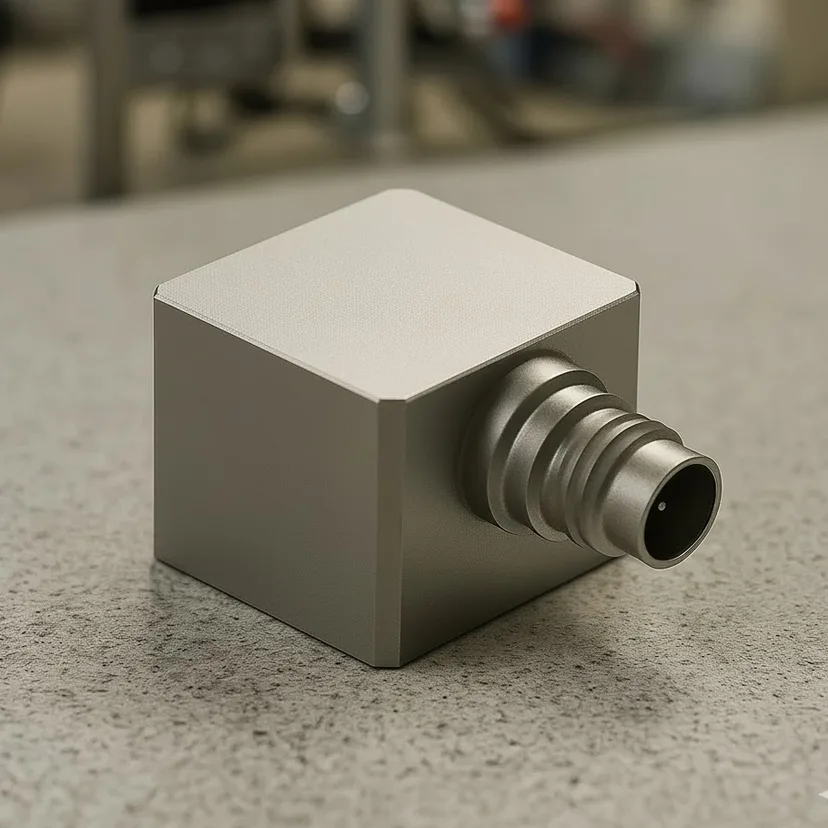
Accelerometers
(e.g., IEPE or TEDS sensors)
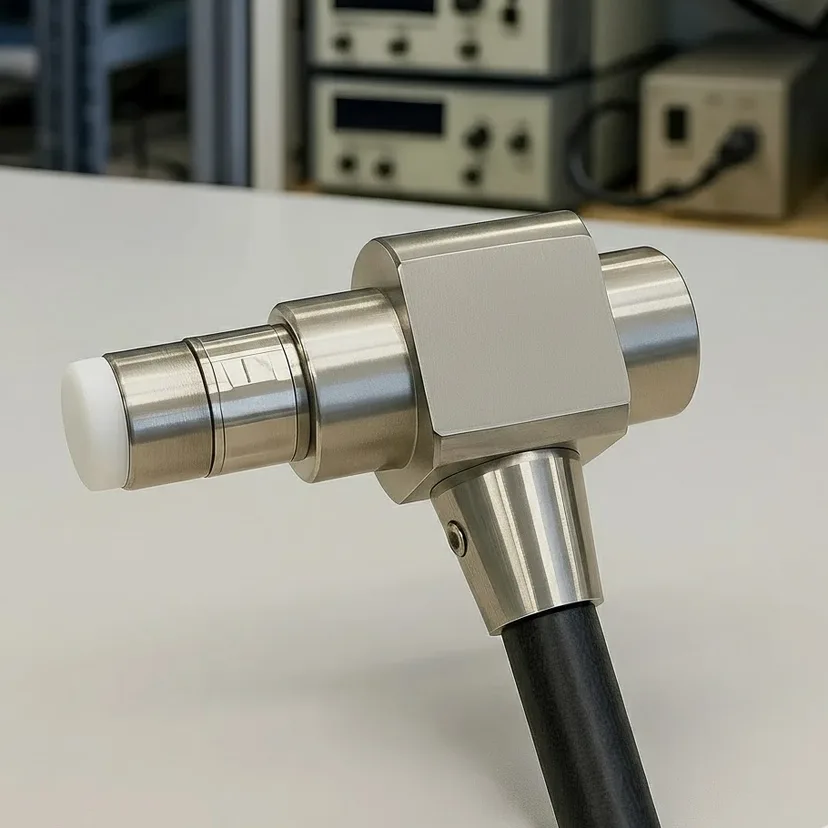
Force sensors
(e.g., from a modal hammer)
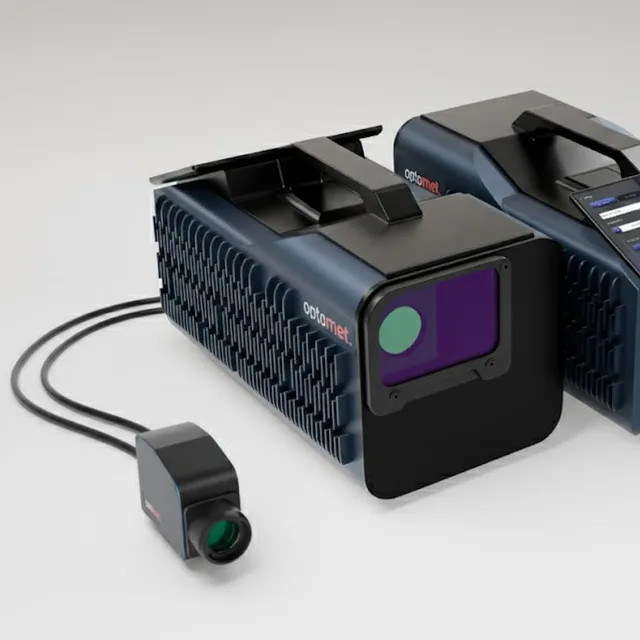
Non-contact reference channel
(e.g., an additional vibrometer or Fiber Head)
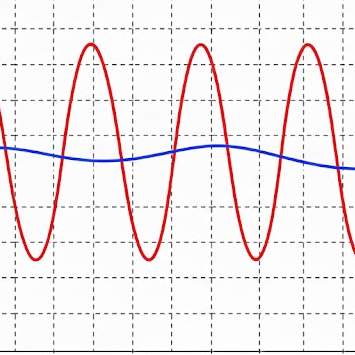
Internal signal generator
(Integrated into the Optomet Scanning Vibrometer)
From 1D scanning to 3D scanning
Expandable with the modular Optomet SMART series
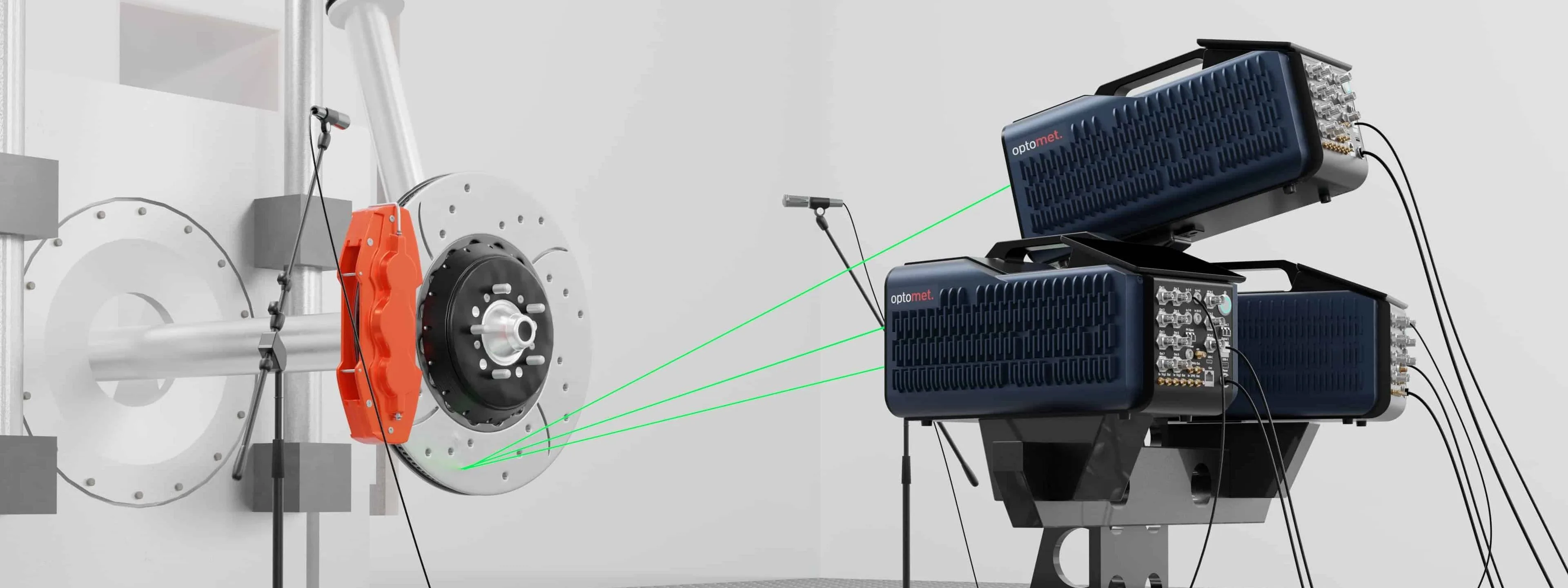
The Optomet SMART series features a modular design and can be expanded flexibly. A system initially used for one-dimensional scanning measurements can later be upgraded to a complete 3D scanning vibrometer. Existing components remain part of the system and are simply supplemented with additional SMART-series devices and components as the system expands.
-3--w3840.webp?2026-08-11T09%3A33%3A04.636Z)
This modular approach makes it possible to start with a compact 1D system and expand its functionality step by step as new measurement tasks arise. The system grows with your requirements and remains adaptable over the long term.
Typical applications in research and industry
Laser scanning vibrometers are used for full-field vibration analysis across a wide range of applications. They enable the investigation of complex structures, the determination of mode shapes and natural frequencies, and the analysis of vibrations under real-world operating conditions.
Typical applications:
- Modal analysis – Determination of natural frequencies, mode shapes, and damping values
- NVH testing – Analysis of noise and vibration effects in vehicles and components
- Aerospace – Structural dynamics testing of wings, fuselage sections, or engine components
- Mechanical engineering – Vibration analysis of machinery, gearboxes, pumps, and rotating systems
- Wind tunnel – Optomet laser Doppler vibrometers are used in BMW's new wind tunnel to measure vibrations under aerodynamic loads.
Laser scanning vibrometers from Optomet
Optomet offers a range of laser scanning vibrometers for a variety of measurement requirements—from compact 1D systems to fully integrated 3D solutions. The instruments differ in configuration, frequency range, and functionality
Scanning vibrometers in the validation process
The Validation of FEM models is a crucial step in ensuring that a simulation accurately reflects the real-world dynamic behavior of a component. Laser scanning vibrometers provide full-field vibration data that can be compared directly with the FEM results. Mode shapes, natural frequencies, and damping are evaluated, and discrepancies between the model and reality are identified.
The validation process includes the following steps:
- Comparison of simulation (FEM) results with real-world vibration measurements
- Evaluation of mode shapes, natural frequencies, and damping
- Review of boundary conditions, material parameters, and stiffnesses
- Verification that the FEM model reflects the component's real-world dynamic behavior.
- Identification and assessment of discrepancies between the model and reality
Why is this comparison important?
Experimental validation reveals how reliably the FEM model reflects the component's real-world dynamic behavior. Comparing natural frequencies, mode shapes, and damping makes it possible to identify discrepancies and fine-tune model parameters. This improves predictive accuracy, accelerates development, and reduces time-consuming iteration cycles.
Optimal workflow with Optomet SMART Lab
SMART Lab supports the entire validation process by bringing simulation and measurement data together in a consistent coordinate system. 3D FEM models can be imported directly, measurement points can be automatically mapped to the FEM nodes, and discrepancies become immediately apparent.
SMART Lab provides:
- Direct import of 3D FEM models (e.g., NASTRAN) into the software
- Measurement directly at FEM nodes through automatic mapping of scan points
- Precise placement of all measurement points at the simulation nodes without manual matching
- Consistent coordinate system for simulation and real-world measurement data
- Rapid detection of discrepancies between simulation and measurement (modes, frequencies, damping)
Benefits of validation:
- Only a validated FEM model provides reliable predictions
- Optimization of the FEM model by comparing it with real measurement data
- Shorter development times
- Fewer design iterations
Integration into automation and test bench environments
Laser scanning vibrometers can be seamlessly integrated into existing test benches, automation environments, or measurement chains. Open interfaces provide access to all measurement data in both digital and analog form, allowing it to be processed directly by higher-level systems.
Interfaces and integration options:
- Ethernet interface for the digital transmission of velocity, displacement, and acceleration data
- Analog output channels for direct integration into existing DAQ hardware
- Open control and data protocols for automated processes and external triggers
- Flexible operation in semi- or fully automated measurement systems
The combination of digital and analog interfaces allows the vibrometer to operate either as a standalone measurement system or as part of a complete automated system.
This section provides answers to frequently asked questions about measurement duration, point density, surfaces, references, software, laser sources, and integration into existing measurement and automation environments.
FAQ: Laser Scanning Vibrometer
What is the difference between a scanning vibrometer and a single-point vibrometer?
A single-point vibrometer measures vibration at a single point along the laser axis.
A scanning vibrometer automatically directs the laser across multiple measurement points to generate a full-field vibration pattern. This makes mode shapes, natural frequencies, and the spatial distribution of vibration visible.
Can 3D vibrations be measured?
Yes. For three-dimensional vibration analysis, Optomet uses a system comprising three scanning vibrometers that work together as a 3D scanning unit . Each vibrometer measures vibration from a different direction. The three systems are time-synchronized, align their measurement points, and exchange relevant control and reference signals during measurement.
Using the three velocity components captured at each measurement point, the system calculates the complete motion in the X, Y, and Z directions. This enables precise visualization of complex 3D mode shapes and spatial directions of motion.
What laser class does a scanning vibrometer use?
Optomet scanning vibrometers use eye-safe laser sources.
The invisible SWIR measurement laser (1550 nm) is classified as Laser Class 1 (< 10 mW) and does not require safety glasses. Alternatively, some systems can be operated with a visible HeNe measurement laser (632,8 nm), which is classified as Laser Class 2 (< 1 mW) and is also considered eye-safe. An additional visible pilot laser, also Laser Class 2 (< 1 mW), is used for alignment. All laser sources used are safe during normal measurement operation and are specified in the technical data sheets for the respective devices.
Which laser sources are used?
Optomet uses different laser sources depending on the application. By default, SWIR lasers (1550 nm) are used, providing high optical sensitivity without requiring surface preparation. Alternatively, depending on the application, visible HeNe lasers (632,8 nm) can also be used. The laser source is selected during the technical consultation process.
Are the measurement points measured simultaneously or sequentially?
Scanning vibrometers generally measure the individual points sequentially. The laser beam is automatically guided across the defined measurement grid, with each point captured separately. A reference signal is then used to correlate the time-shifted individual measurements with the correct phase relationships, producing a complete vibration pattern.
In Full Body Scans, multiple scanning vibrometers operate in parallel.
Each device still measures its points sequentially, but the individual vibrometers capture different areas of the object simultaneously. SMART Lab then combines all points spatially and temporally.
- A single scanning vibrometer: Points are measured sequentially.
- Full Body Scan (multiple vibrometers): multiple sequential scans run in parallel and are synchronized.
How is the component excited?
How the component is excited depends on the measurement method and the objective of the test. Active excitation sources—such as a shaker, modal hammer, or piezo actuator—are often used to generate defined, reproducible vibrations. For measurements under operating conditions, the structure can also be excited by real-world influences such as a running motor, wind, or process forces.
Typical excitation methods:
- Modal hammer for impulsive excitation
- Shaker for defined, variable-frequency, or broadband excitation
- Piezo actuators for high-frequency or localized excitation
- Sound fields (e.g., loudspeakers) for acoustic excitation
- Real-world operating conditions, when behavior under load is to be investigated
- Internal signal generator (with Optomet Scanning Vibrometers) as a defined, integrated excitation source
Is special software required for the measurement?
For Scanning Vibrometers, SMART Lab or OptoSCAN provides a fully integrated software solution that combines measurement grids, instrument control, and analysis.
However, its use is not mandatory: Alternatively, all measurement data can be output via digital or analog interfaces and processed further in any external analysis environment.
Usage options:
- SMART Lab / OptoSCAN / OptoGUI for complete control, visualization, and analysis
- External software (e.g., MATLAB, LabVIEW, Python, FEM tools, or custom solutions) via open data and control interfaces
- Analog or digital raw data output (e.g., velocity, acceleration, displacement) for direct downstream processing
This allows the vibrometer to be used either as a complete, integrated measurement solution or as a flexible data source within existing analysis or automation systems.
Can a scanning vibrometer be integrated into automation environments?
Scanning vibrometers can be integrated into automated test benches and existing measurement chains via open interfaces. Measurement data is available in both digital and analog form and can be transferred directly to external systems.
Interfaces and integration:
- Gigabit Ethernet for digital measurement data and control commands
- Analog outputs for velocity, acceleration, or displacement
- External triggers for synchronized measurement sequences
- Open data formats for further processing in custom systems
- Compatible with automated sequences, e.g., for test-bench or end-of-line applications
This allows the vibrometer to operate either as a stand-alone measurement system or as part of a fully automated system.
How long does a typical scan take? (Including measurement points per second)
The duration of a scanning measurement depends on various factors, including the desired frequency resolution, the number of measurement points, and the vibration frequencies being investigated. For a quick overview, the test object can be scanned at up to 50 points per second.
How many measurement points are recommended?
The required number of measurement points depends on the spatial complexity of the modes being investigated. Higher frequencies have shorter wavelengths and more nodal lines, requiring denser spatial sampling to accurately capture the mode shapes.
What is the maximum number of measurement points that can be captured?
The SMART Scanning Vibrometers capture up to 512 × 512 measurement points across the defined measurement area. This enables complete, high-resolution analysis of even complex structures.
Do I need reflective tape for the measurement?
No. The SWIR lasers used in Optomet Scanning Laser Doppler Vibrometers enable reliable measurements without reflective tape, even on dark or rough surfaces. Thanks to their high sensitivity and strong backscattered signal, the systems achieve a stable, high signal-to-noise ratio – even under challenging measurement conditions.
How far can the vibrometer be positioned from the test object?
The Scanning Vibrometer can be used over a wide range of distances. Depending on the measurement setup and object size, the following working distances are possible:
- Up to 100 m working distance for standard scanning applications – ideal for larger structures or hard-to-reach test objects.
- Minimum working distance of approx. 6.5 mm when capturing very small objects or fine details.
Depending on the optics, the system can therefore perform measurements from distances of just a few millimeters as well as from up to 100 meters away.
Can FEM models be compared with the measurement data?
Yes. The Optomet software SMART Lab supports the import of 3D models. Users can import their FEM geometries and position measurement points precisely at the FEM node locations. This enables precise comparison of measurement data and simulation results, allowing FEM models to be efficiently validated and optimized.
What size can the component be?
An Optomet scanning laser vibrometer covers an exceptionally wide range of object sizes:
- Very small structures < 1 mm², such as MEMS components
- Large objects > 10 m², such as housings, machine parts, or larger components
With the Optomet SMART series, multiple scanning vibrometers can also be synchronously networked. This also enables measurements of entire vehicles or aircraft (“Full-Body Vibrometry”).
What frequencies can be measured?
A single instrument can measure frequencies from DC to 50 MHz can be measured – suitable for slow vibrations as well as very high-frequency dynamic processes.

Vibration measurement in research, development and industry – Optomet offers the right solution for your requirements.
Contact