

Understanding Laser Vibrometers
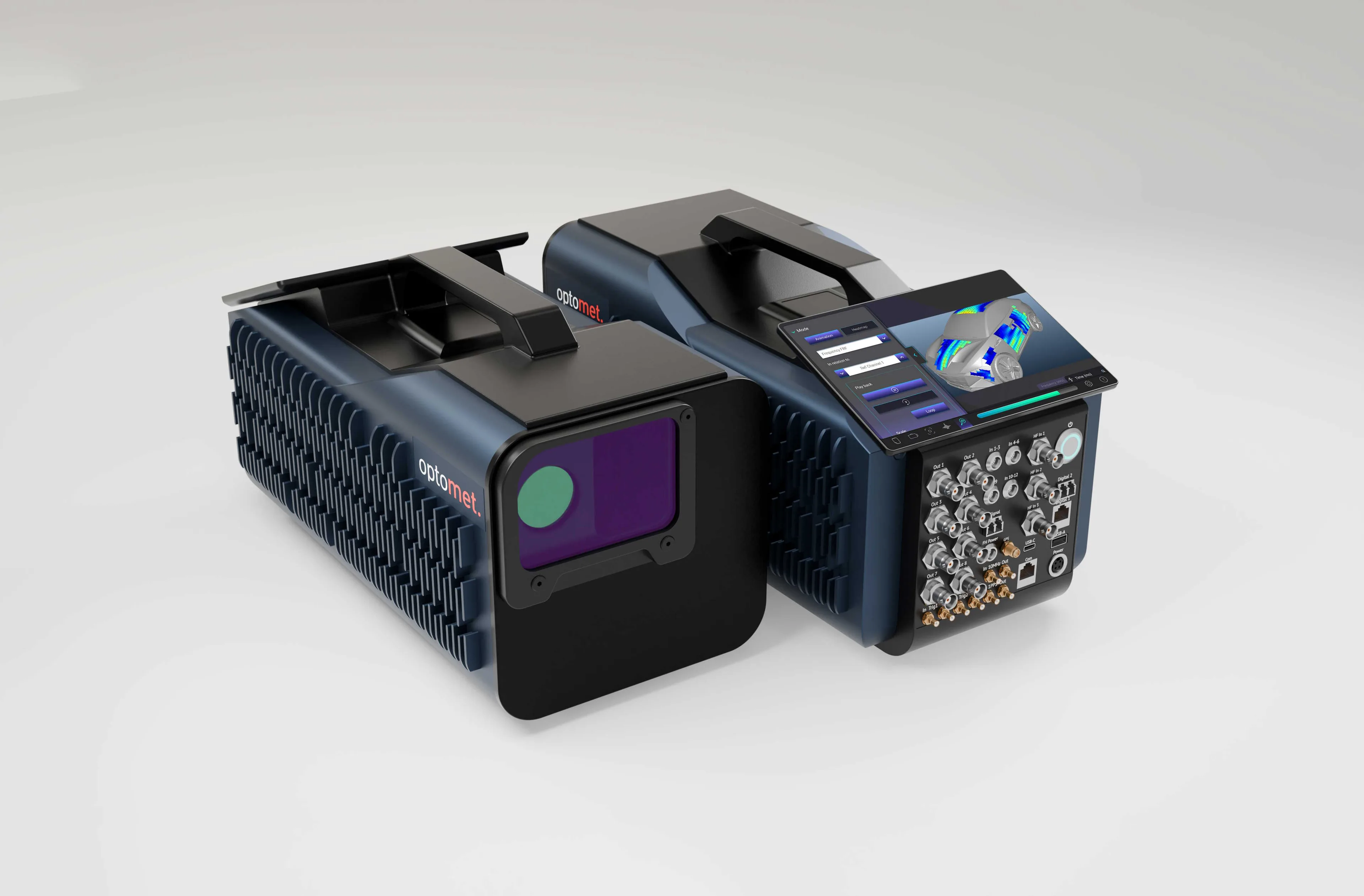
Comprehensive information and in-depth insights into the world of laser vibrometers — the fundamentals, working principle and technology behind these high-precision instruments.
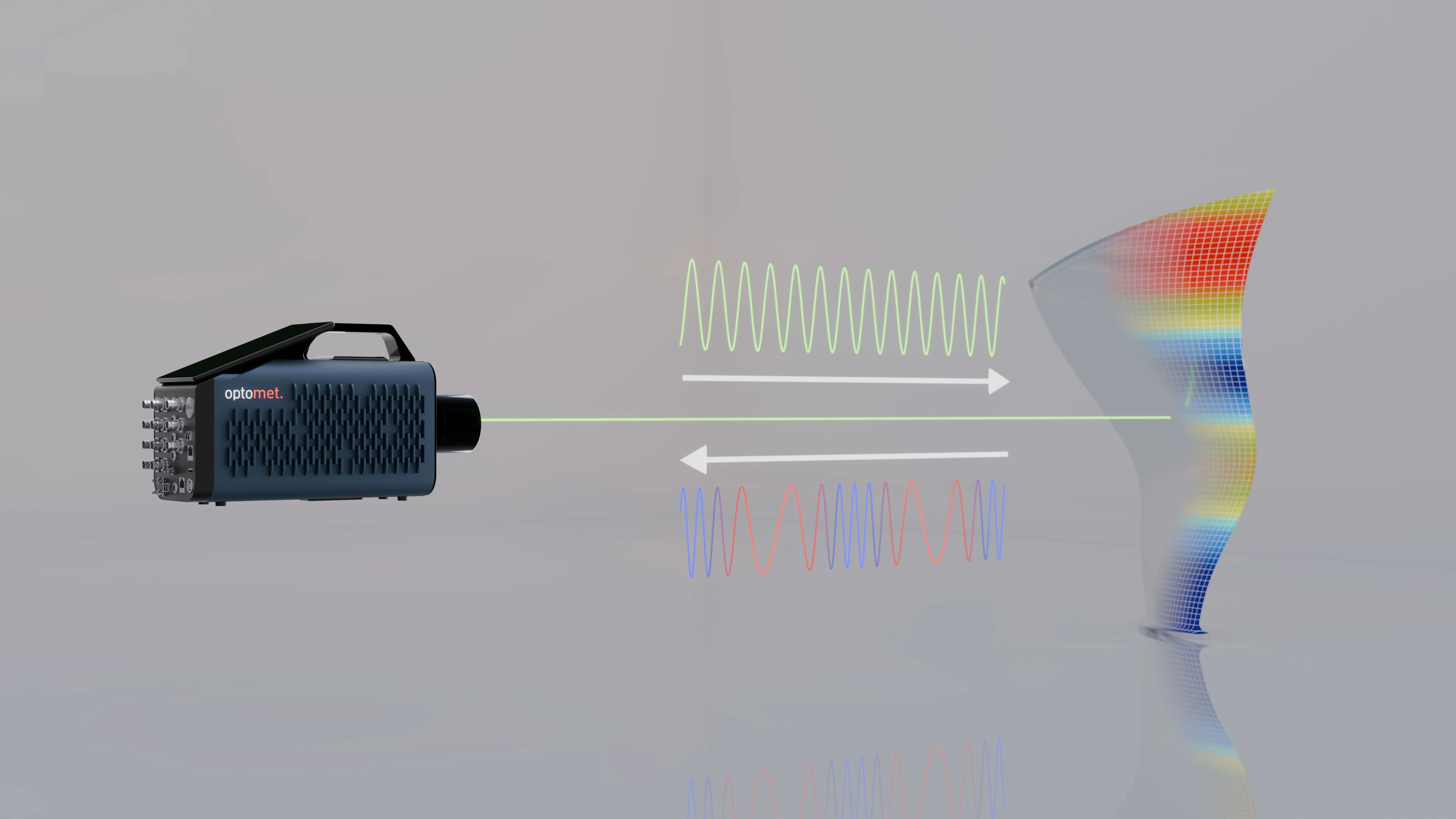
Doppler Effect
Relative motion changes the perceived frequency of a wave. This principle forms the physical basis of optical vibration measurement.
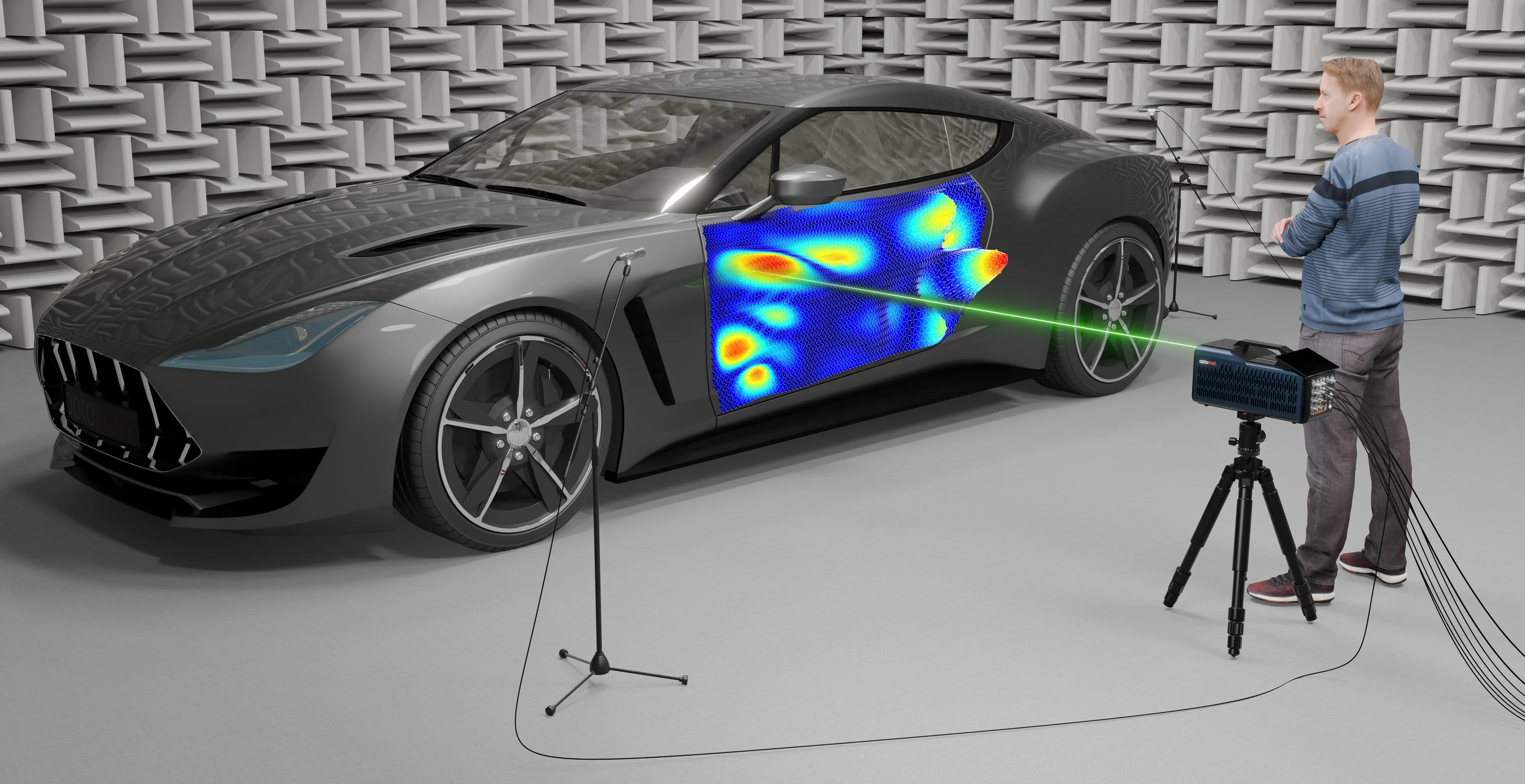
Vibration Measurement
Amplitude, frequency, phase, and mode shapes make the dynamic behavior of a component measurable. An overview of measurement parameters and analysis methods.
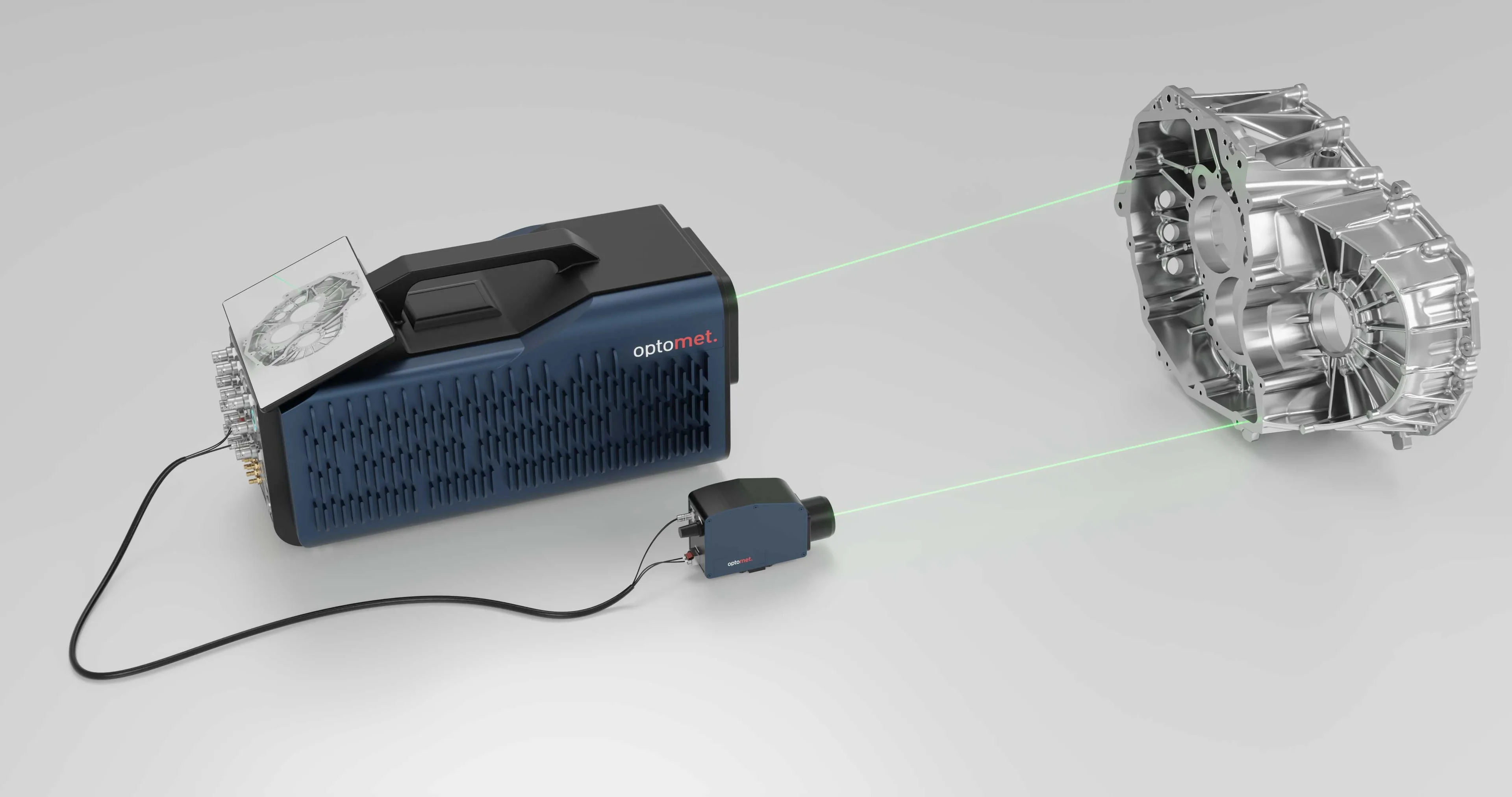
Laser source
Wavelength and coherence determine signal quality, speckle behavior, and the usable measurement distance. HeNe and SWIR lasers are therefore suited to different surfaces.
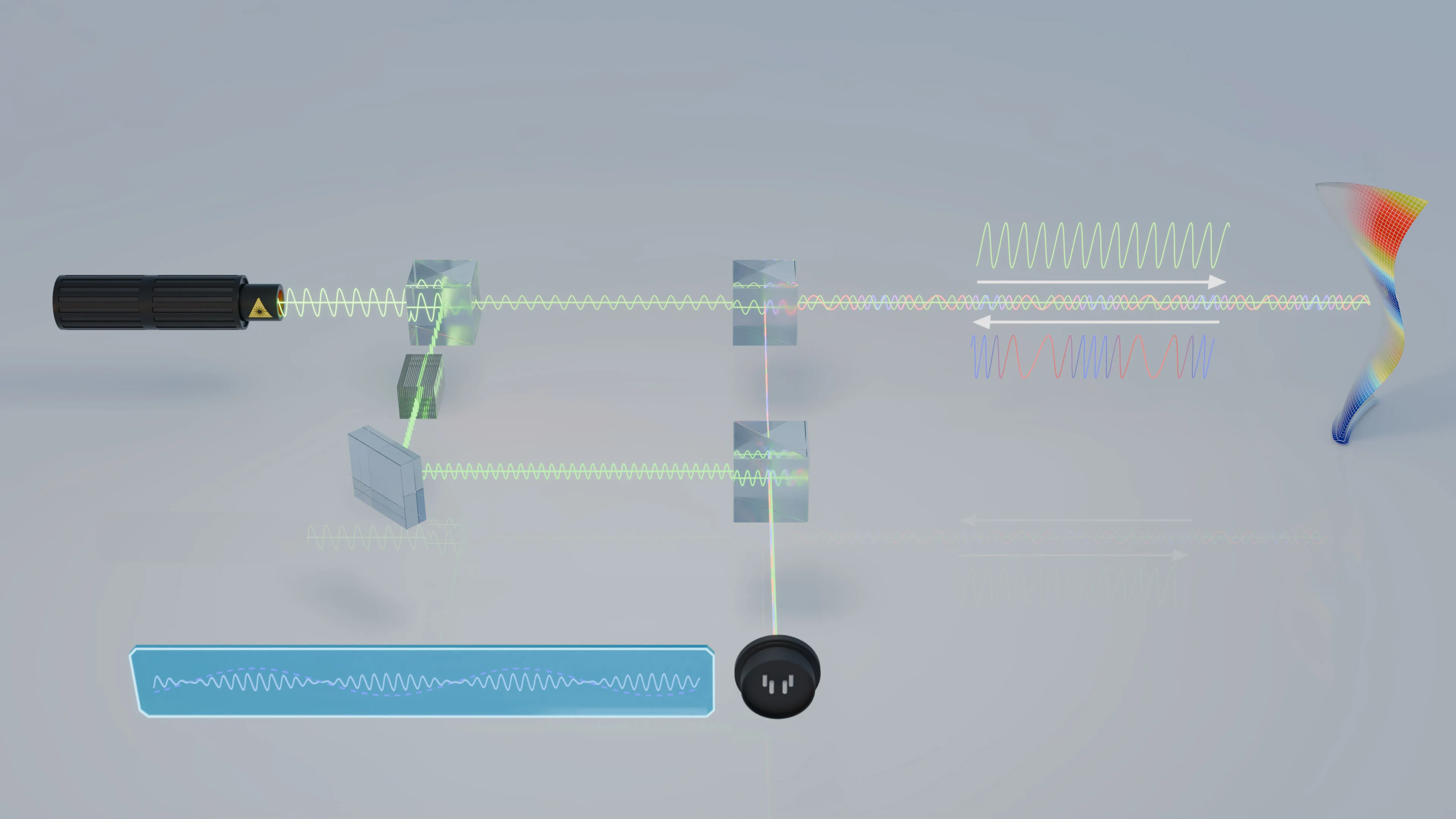
Signal Processing
From the photodetector to reliable measurement results: demodulation, filtering, sampling rate, FFT, and the noise floor determine the quality of vibration data.
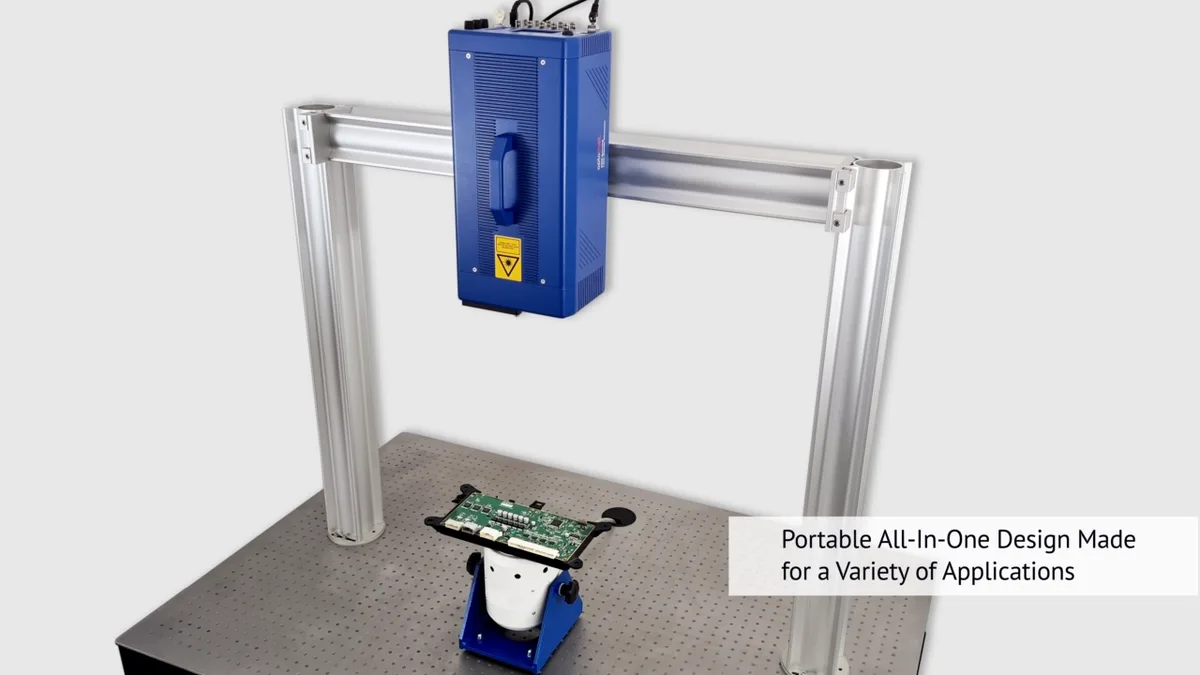
Vibration Measurement of Printed Circuit Boards (PCBs)

Vibration measurement from a great distance
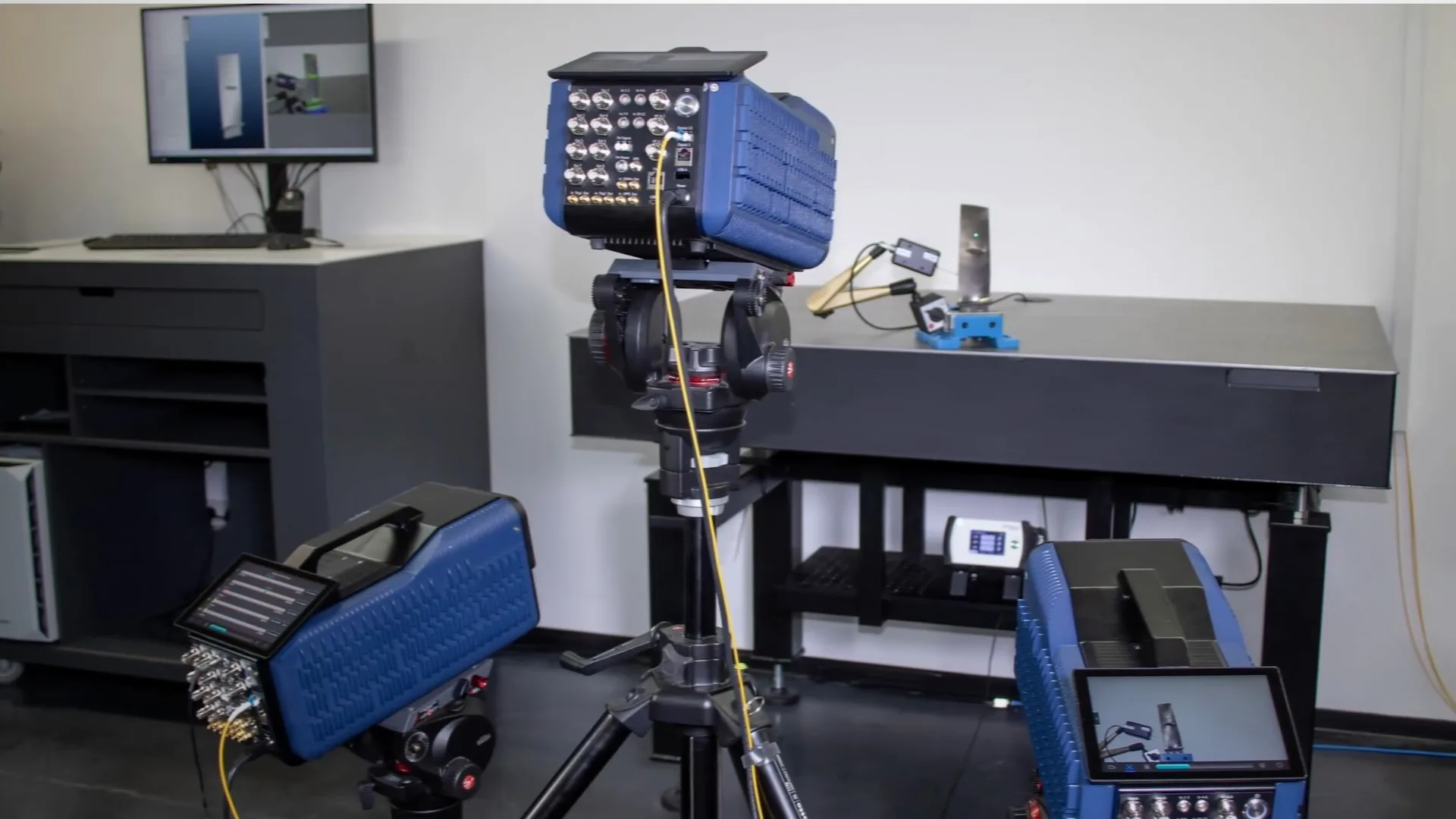
Vibration measurement on turbine blades and blisks
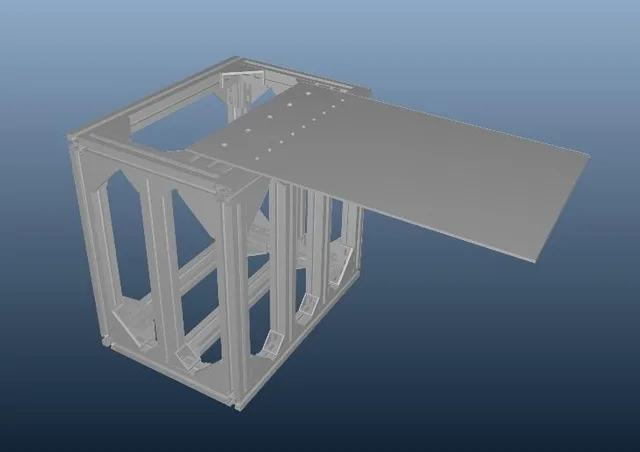
FE model validation using scanning vibrometry
Validate FE models using full-field experimental data: measurement points on the FE model, non-contact scanning, FRF, mode shapes and MAC. Case study with 208 points.

In-Plane Modes in Brake Discs
Brake squeal is usually driven by coupled modes. A 3D scan separates axial, radial and tangential components and reveals in-plane modes.